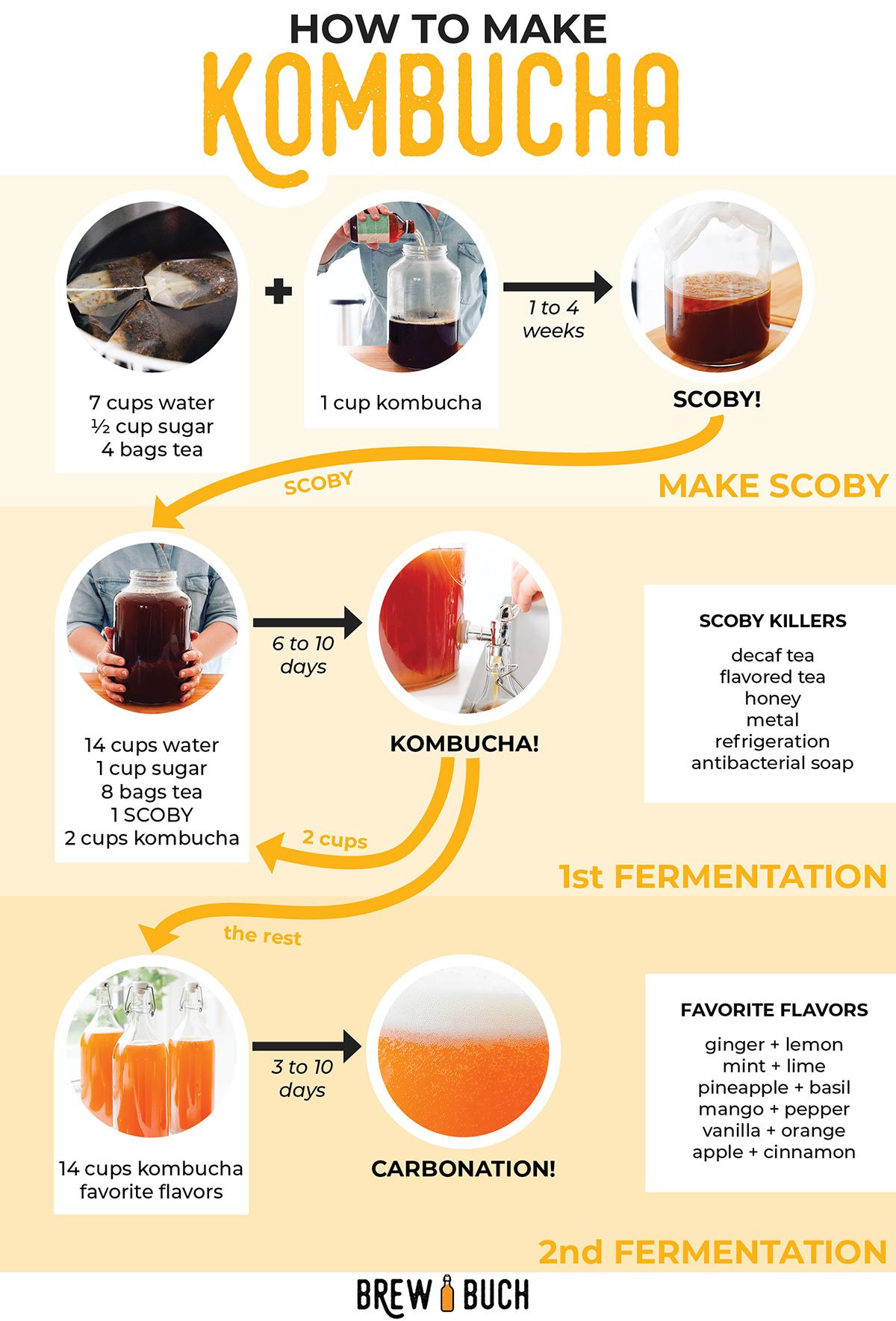
Kombucha fermentation process is a fascinating and ancient method of brewing tea that has been around for centuries. This fermented drink has become increasingly popular in recent years, as more people are looking for healthier alternatives to soda and other sugary beverages.
Kombucha is made by fermenting sweetened tea with a SCOBY (symbiotic culture of bacteria and yeast), which transforms the sugar into beneficial acids and probiotics. The end result is a refreshing, effervescent drink that can be enjoyed on its own or used as a mixer in cocktails.
The first step in making kombucha is to brew black or green tea with sugar. It’s important to use real sugar, as artificial sweeteners won’t work with the SCOBY. Once the tea has cooled to room temperature, it’s time to add the SCOBY.
The SCOBY looks like a rubbery pancake and is responsible for fermenting the tea. It contains both bacteria and yeast cultures that work together to break down the sugars in the tea into lactic acid, acetic acid, and other organic compounds.
As the kombucha ferments, it will develop a tangy flavor and fizziness from naturally occurring carbon dioxide gas. The length of fermentation time depends on personal taste preferences but typically ranges from 7-14 days.
During this time, it’s important to keep the kombucha covered with a breathable cloth or paper towel secured tightly over it using an elastic band. This allows air circulation while keeping out any contaminants that could spoil your batch.
It’s also crucial to maintain proper hygiene during every step of brewing Kombucha. Cleanliness helps ensure there are no unwanted microorganisms growing alongside your desired cultures within your brew environment which would cause contamination leading towards bad quality Kombuchas.
Once you’ve reached your desired level of fermentation based on taste preference, remove your SCOBY along with some reserved starter liquid – this serves as an added boost to your next batch of Kombucha. You can also bottle the kombucha at this point to allow for continued fermentation in a second stage, which develops additional carbonation.
If you choose to bottle and continue fermentation, it’s important to use flip-top bottles designed for high-pressure situations or other tightly sealed containers that can withstand the pressure buildup. This is because ongoing fermentation will produce more CO2 gas than what can be released from an open container like during primary ferment.
It’s essential to burp your bottled Kombuchas every day by releasing built-up pressure gently. Otherwise, you risk breaking bottles due to excessive pressure buildups, which would lead towards a tragic waste of time and ingredients invested in making quality kombuchas.
After a few days of secondary fermentation (typically 1-3 days), place your bottles into the fridge where they’ll keep fresh for up to a month if not opened. If left unrefrigerated post-bottling, the yeast culture could continue producing CO2 and alcohol leading towards explosive results if enough pressure builds up inside poorly made bottles or non-airtight lidded jars.
While there are many flavor variations available commercially today such as ginger lemonade or blueberry lavender – one great aspect about brewing Kombucha is how customizable it is; you can experiment with different teas or fruit juices until you find what works best for your taste preferences.
Kombucha has become increasingly popular amongst people looking for healthier alternatives compared to sugary beverages like soda. It’s incredibly easy and inexpensive way of brewing at home requires only basic equipment such as tea bags/sugar/SCOBY/cloth coverings etc., making it accessible even for beginners who want better control over their health choices while still indulging themselves with fun flavors!
In conclusion: Kombucha fermentation process takes patience but provides deliciously healthy benefits! With these simple steps, anyone can brew their own kombucha right at home. So why not give it a try and see what all the fuss is about?

Leave a Reply