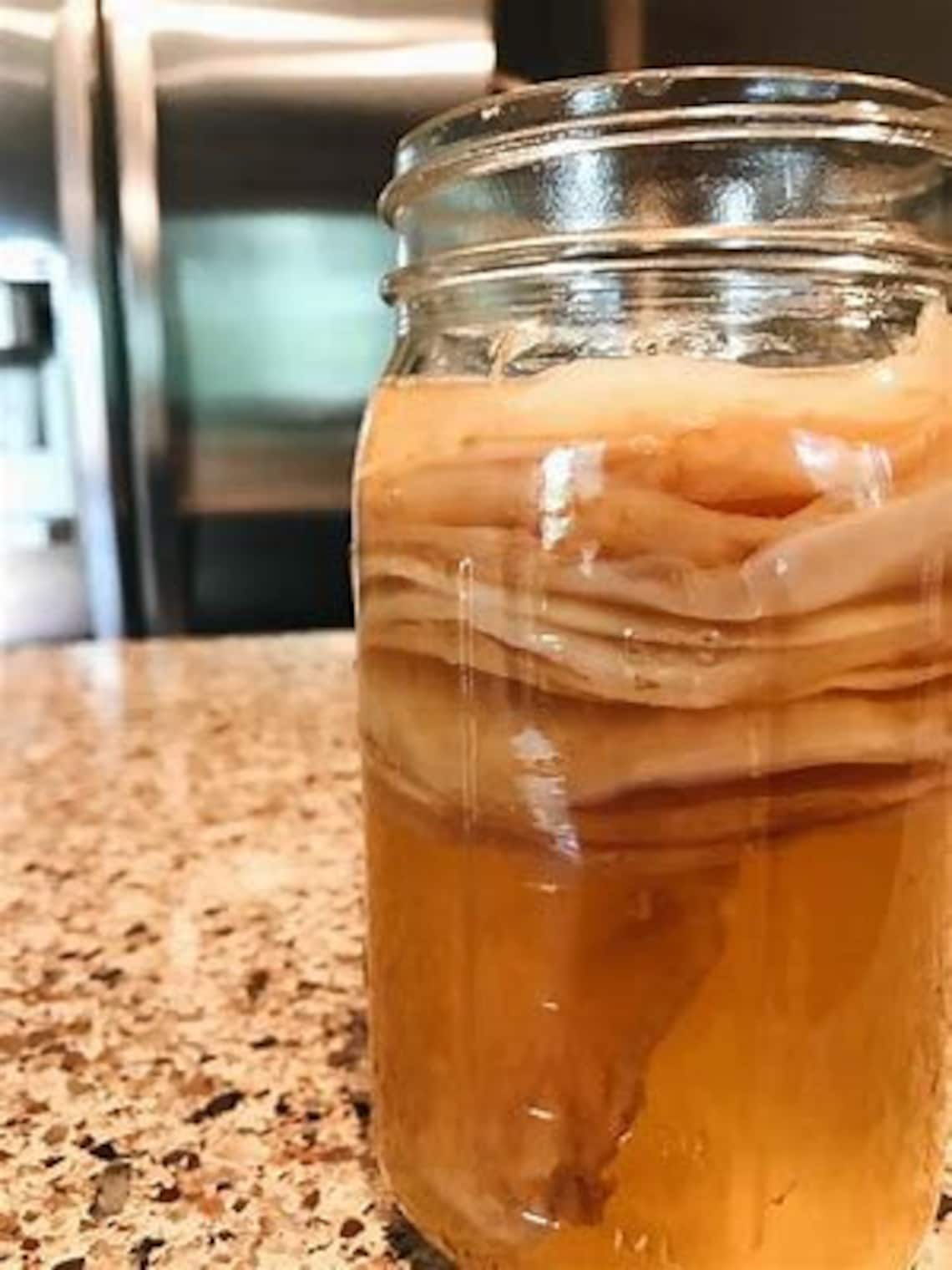
Kombucha SCOBY: A Healthful Elixir for Your Gut
Kombucha, an effervescent tea drink that has gained a reputation as a cure-all elixir, is made from sweetened tea and a symbiotic culture of bacteria and yeast (SCOBY). SCOBYs are rubbery, jelly-like discs with stringy tendrils. They resemble translucent gelatinous pancakes and float on top of the sugary tea mixture used to ferment kombucha.
While it might seem strange to intentionally put bacteria and yeast into your body, consuming kombucha is said to provide numerous health benefits. The fermentation process creates healthy probiotics, organic acids, antioxidants, vitamins B1-B6, folic acid, acetic acid, and glucuronic acid.
The origins of kombucha are somewhat mysterious. Some believe that it originated in China or Russia hundreds or even thousands of years ago. Others suggest that the SCOBY came from Tibet and was called “the Kargasok Tea Fungus.” Regardless of its origin story, today’s modern-day kombucha brewers use similar techniques in creating this delicious beverage with all its health benefits.
To make your own batch at home you will need:
– 1 gallon glass jar
– Scoby starter (can be found online)
– Organic black or green tea
– Sugar
– Water
– Cheesecloth or coffee filter
– Rubber band
Instructions:
1. Brew 12 cups of water with about 8 bags of organic black or green tea.
2. Add one cup of sugar to the hot brewed tea.
3. Let cool completely before adding one cup starter liquid plus scoby.
4. Cover the jar with cheesecloth/coffee filter secured by rubber bands so no bugs get inside but air can circulate.
5. Store in a warm place away from direct sunlight for seven days.
After seven days have passed you can taste your kombucha to see if it’s ready. If it’s sweet, let it ferment for another day or two. If the taste is too tart, you can brew a milder batch next time.
Properly brewed kombucha should have a slightly acidic and tangy taste that has an effervescent quality similar to soda pop. Some people describe it as sour apple cider with fizz.
SCOBYs are reusable and will grow in thickness over time as they reproduce. You can save some of the SCOBY from each batch to start your next one or give them away to friends who are interested in brewing their own kombucha.
Kombucha SCOBYs can be stored in the refrigerator between batches for up to six weeks before losing their effectiveness. Keep them submerged in some of the finished kombucha tea so they stay moist and alive until you’re ready to use them again.
It’s important not to consume any moldy or discolored SCOBYs since these could lead to adverse health effects like stomach upset, fever, diarrhea, and infection.
The benefits of drinking kombucha go beyond just taste – there are numerous potential health benefits associated with this fermented drink:
1) Improved digestion
Kombucha contains probiotics which promote healthy gut bacteria growth leading to improved digestion. It also helps break down food more easily by increasing stomach acidity levels helping with nutrient absorption.
2) Detoxifying properties
Kombucha contains glucuronic acid which binds toxins together helping remove them from the body via urine, reducing strain on liver function
3) Promoting overall immune system health
Kombucha’s antioxidant content strengthens your immune system against pathogens that cause disease
4) Reducing inflammation levels
Inflammation is known to lead chronic diseases including heart disease, cancer, arthritis etc., Kombuchas anti-inflammatory properties may help reduce risk factors associated with these ailments
5) Energy boost without caffeine crash
Kombucha contains small amounts of caffeine, but it’s also rich in B vitamins and other minerals like iron that help boost energy levels without causing the “crash” some people experience after consuming coffee.
In conclusion, Kombucha is a delicious and healthful drink that has been enjoyed for centuries. Brewing your own kombucha at home is easy and rewarding. SCOBYs can be reused indefinitely as long as they are properly cared for and stored.
So why not give this fizzy elixir a try? Your gut will thank you!

Leave a Reply