Economic Impact of the Goji Berry Industry on Local Communities and Economies
The goji berry, also known as wolfberry, has been consumed for centuries in China and other Asian countries. However, it has gained popularity in recent years due to its numerous health benefits, which include boosting the immune system and improving eyesight. The growing demand for goji berries has led to the emergence of a thriving industry that is benefiting local communities and economies.
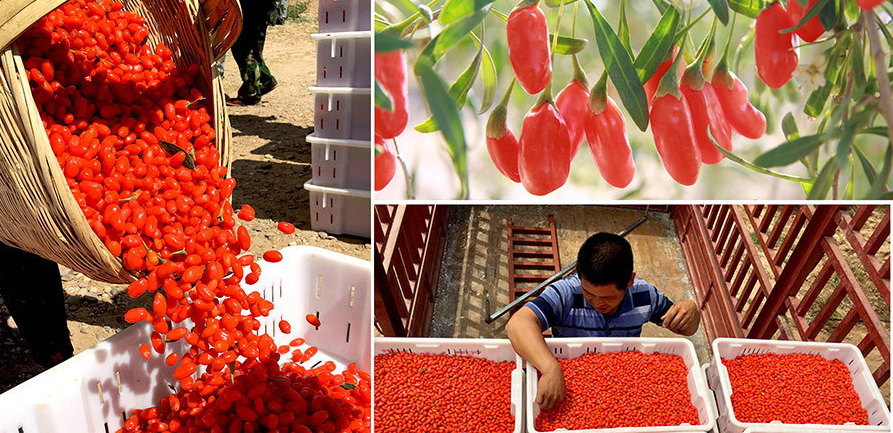
One of the key economic benefits of the goji berry industry is job creation. The cultivation and harvesting of goji berries require a significant amount of labor, which provides employment opportunities for residents of rural communities where unemployment rates are often high. In some areas of China, where most of the world’s supply comes from, entire villages have shifted from subsistence farming to commercial production of goji berries. This change has provided a stable source of income for many families who were previously struggling to make ends meet.
Moreover, as demand for goji berries grows globally, more people are becoming involved in their production and distribution. This trend is creating new jobs in transportation, logistics, marketing, and sales both domestically and internationally.
Another economic benefit associated with the goji berry industry is increased revenue for local businesses. As farmers sell their harvests to processors or wholesalers who then distribute them across different markets nationally or internationally , they generate income that can be spent locally on goods such as farm equipment or services like healthcare or education . Such purchases not only improve their living standards but also boost local businesses’ revenues through indirect spending.
In addition to providing jobs and increasing revenues locally,the growth in demand for these superfoods creates an opportunity for diversification among agricultural products grown by farmers . By introducing new crops into existing systems – including intercropping with other fruits such as raspberries – this allows them to diversify their income streams while simultaneously contributing to food security within their region.
For instance , in the Southern Province of Zambia, farmers are growing goji berries alongside cash crops such as maize and vegetables. This approach has provided them with an additional source of income while ensuring food security for their families and communities.
The goji berry industry also contributes to poverty reduction in many developing countries. In China, where a significant proportion of the world’s supply is grown, the government has implemented policies to encourage small-scale farmers to cultivate goji berries. By providing subsidies for seedlings and technical support on cultivation practices, they have enabled small-scale farmers to participate in the industry and earn a living from it.
Similarly, outside China, programs have been initiated by non-governmental organizations (NGOs) that work with local communities and provide them with training on best practices for growing goji berries. These initiatives aim at empowering people who live below or close to the poverty line by giving them access to new sources of income through the development of agricultural value chains.
One final economic benefit associated with this superfood is its potential contribution towards sustainable agriculture practices.In some areas where farms were previously abandoned due to soil degradation resulting from unsustainable land use techniques , there are reports that Goji berry farming has helped rejuvenated these lands .This can be attributed to their deep roots which help bring nutrients back into depleted soils over time .
In conclusion,the growth in demand for goji berries presents an opportunity not just for improved health but also provides a means towards economic growth within rural communities globally . Moreover,it allows us an opportunity towards sustainability as we look into alternative crops that can contribute positively both economically and environmentally .

Leave a Reply