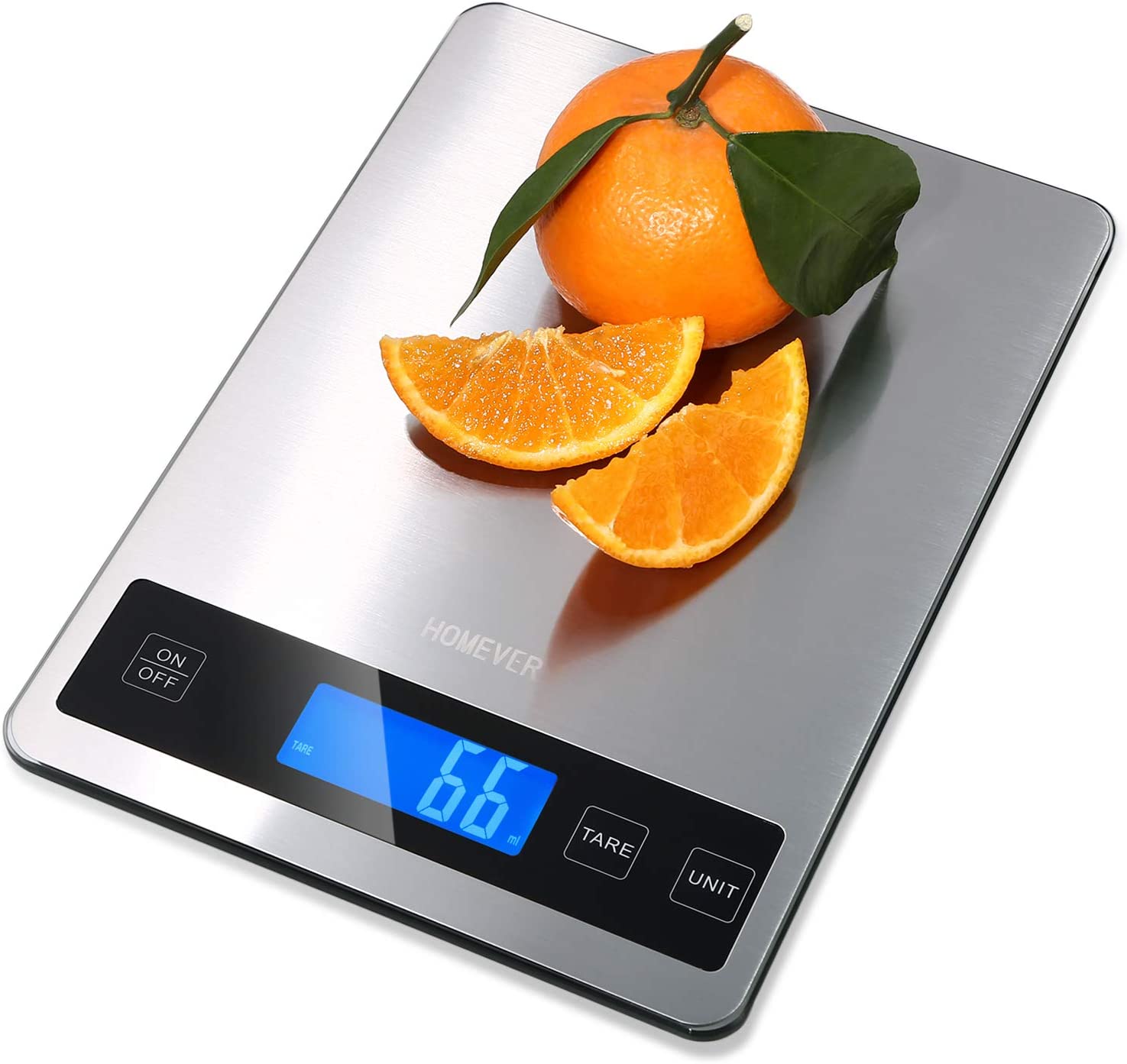
As more and more people are becoming health-conscious, the need for accurate portion control has become increasingly important. In order to achieve this, a food scale is an essential tool that every health enthusiast should consider.
A food scale is a kitchen device used to measure the weight of food items accurately. The device comes in different shapes and sizes, with some having additional features such as nutritional values.
Why Use a Food Scale?
Using a food scale in measuring ingredients can help you maintain proper portion control. This not only helps you stay within your calorie limits but also ensures that you are getting the right nutrients from your meals.
Measuring portions using cups or spoons may provide inaccurate results because some foods have varying densities and therefore require different amounts of space despite having equal weights. For example, one cup of cooked rice may look entirely different from another cup of cooked pasta even though they weigh the same amount.
Another reason why using a food scale is crucial is accuracy when counting calories. Most packaged foods come with serving size information on their labels; however, these measurements may not be precise enough for those who want to monitor their caloric intake or macros strictly.
How Does It Work?
Food scales use digital technology to display measurements accurately. They come with an LCD screen that shows precise readings up to 0.01 grams depending on the model’s specifications. The devices operate using batteries making them portable and easy to carry around in case you need to measure items while away from home.
Some advanced models have touch-sensitive buttons for easy operation and automatic shut-off features that save battery power when left idle for too long.
Types of Food Scales
There are two main types of food scales: analog and digital scales:
1) Analog Scales
Analog scales rely on mechanical springs or levers connected directly to their displays without any electronic components involved in measuring weight leading to possible inaccuracies over time due wear-and-tear issues common among older models.
2) Digital Scales
Digital scales use electronic sensors to measure weight and produce more accurate results. They are easy to read, come in various sizes and shapes, and can be programmed with specific measurements such as grams or ounces.
When choosing a food scale to buy, consider the size of your kitchen space, the amount of food you intend to measure regularly, and your budget.
How to Use a Food Scale?
Using a food scale is simple:
1. Place the empty container on the device’s platform
2. Turn on the scale
3. Add ingredients into the container until you reach your desired weight
4. Press tare or zero out button between weighing different items.
5. Once done measuring all ingredients needed for your recipe, take note of their weights.
6. Clean up by wiping down any spills or crumbs from both containers used before storing away.
Conclusion
In conclusion, using a food scale is an essential tool for maintaining healthy eating habits while monitoring portion control accurately. With modern technology making them affordable and available at most stores selling kitchen equipment, there is no excuse not to own one if you’re serious about living healthily!

Leave a Reply