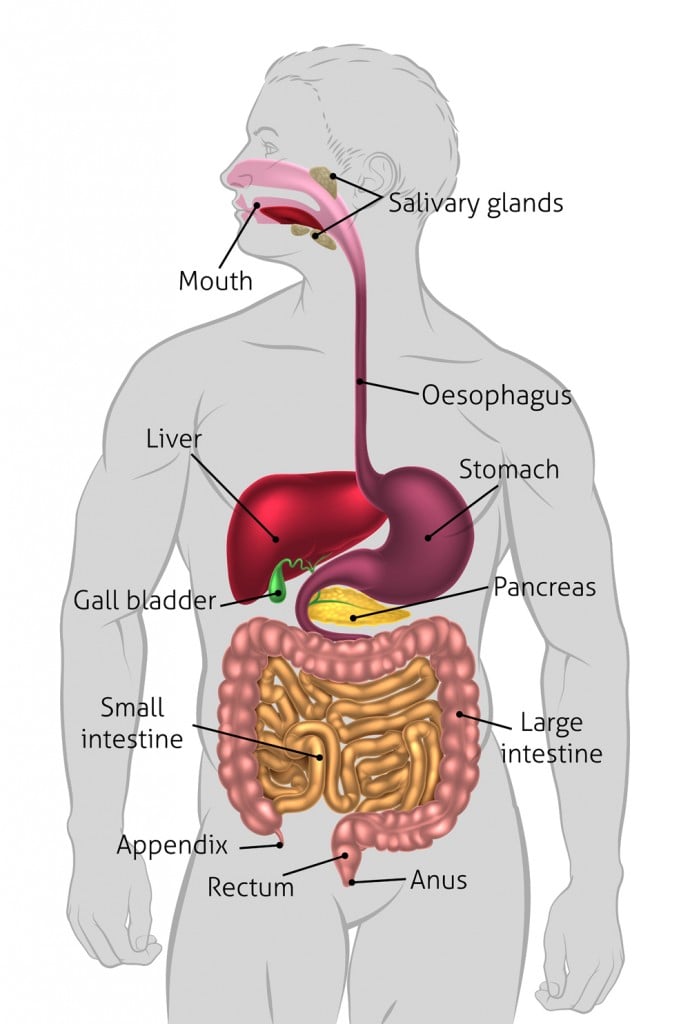
The human digestive system is a complex and intricate network of organs that work together to break down food, absorb nutrients, and eliminate waste. It’s also one of those systems that we often take for granted until something goes wrong.
Let’s start with the mouth where digestion begins. The teeth grind and crush the food while the tongue helps push it towards the back of the throat. Salivary glands produce saliva which contains enzymes that begin breaking down carbohydrates.
Once swallowed, food travels down through the esophagus into the stomach where it is further broken up by stomach acid and digestive enzymes. Contrary to popular belief, stomach acid isn’t strong enough to dissolve metal but can cause some serious damage if it leaks out into other parts of our body.
Next up is the small intestine where most nutrients are absorbed. Here, pancreatic enzymes help break down proteins, fats, and carbohydrates before they’re absorbed into your bloodstream.
Finally comes large intestine or colon – a place not many people like talking about but plays a vital role in waste elimination from our body. This part absorbs water from undigested food helping solidify stool before passing through rectum as feces.
It’s important to note that healthy eating habits play an essential role in maintaining good digestive health. Eating fiber-rich foods like fruits and vegetables can help keep things moving smoothly while drinking plenty of water keeps you hydrated throughout your day.
So there you have it – a brief overview of how our digestive system works! Even though this post was written in a satirical manner let’s not forget how much we rely on this amazing system every day!

Leave a Reply