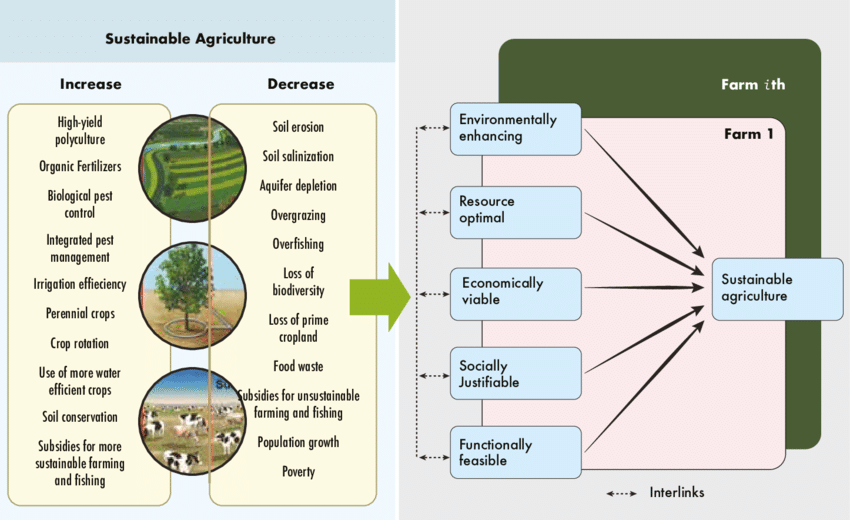
Sustainable agriculture is the practice of farming that focuses on meeting the needs of the present generation without compromising the ability of future generations to meet their own needs. It is a holistic approach that considers environmental, economic, and social factors in food production.
One key aspect of sustainable agriculture is soil health. Healthy soil ensures that crops grow well and are resistant to pests and diseases. Farmers can maintain soil health by reducing tillage, using cover crops, rotating crops, and adding organic matter such as compost or manure to the soil.
Another important factor in sustainable agriculture is water conservation. Irrigation can account for up to 90% of water use on some farms. Sustainable farmers use techniques like drip irrigation or rainwater harvesting to reduce water usage while still producing healthy crops.
Crop diversity is also essential in sustainable agriculture. Planting a variety of crops helps prevent pests from spreading throughout a field and reduces the need for pesticides. It also promotes biodiversity by providing habitats for pollinators like bees and butterflies.
Sustainable livestock farming practices focus on animal welfare while minimizing environmental impact. Livestock should be allowed access to pasture whenever possible instead of being confined in feedlots where they produce large amounts of waste that can pollute nearby water sources.
In addition to these practices, many sustainable farmers prioritize local food systems over global ones. Local food systems promote regional self-reliance and reduce transportation-related emissions while supporting small-scale farmers who may not be able to compete with larger agribusinesses.
The benefits of sustainable agriculture extend beyond just environmental stewardship; they include economic benefits as well. Sustainable farms tend to have lower overhead costs because they don’t rely on expensive inputs like synthetic fertilizers or pesticides.
This allows them greater flexibility in response to market changes, which makes them more resilient during times when prices fluctuate or demand shifts unexpectedly. Additionally, many consumers are willing to pay premium prices for sustainably grown products due to concerns about the environmental and social impacts of conventional agriculture.
However, transitioning to sustainable agriculture can be a challenge for farmers who are accustomed to conventional practices. It requires significant upfront investments in new equipment or changes in farming techniques, which can make it difficult for some farmers to adopt.
To address these challenges, government programs provide financial assistance and technical support to help farmers transition to more sustainable practices. These programs also offer funding for research into sustainable agricultural practices and promote education about their benefits.
In conclusion, sustainable agriculture is a holistic approach that considers environmental, economic, and social factors in food production. By promoting soil health, water conservation, crop diversity, healthy livestock management practices, local food systems and reducing input costs; Sustainable Agriculture is an essential tool for mitigating climate change while ensuring that future generations have access to nutritious food.

Leave a Reply