Protein-rich Fruits and Vegetables: A Guide to Boosting Your Protein Intake
When it comes to building and repairing tissues, protein plays a vital role in our overall health. While meat, eggs, and dairy products are commonly known for their high protein content, there are also several fruits and vegetables that pack a protein punch. Incorporating these plant-based protein sources into your diet can help meet your nutritional needs while enjoying a variety of flavors.
1. Spinach:
This leafy green is not only packed with vitamins and minerals but also contains a surprising amount of protein. With approximately 2 grams of protein per cup, spinach makes an excellent addition to salads, smoothies or sautés.
2. Broccoli:
Broccoli is well-known for its many health benefits, including being rich in fiber and antioxidants. What many people don’t realize is that this cruciferous vegetable also boasts about 3 grams of protein per cup. Enjoy steamed broccoli as a side dish or toss it into stir-fries for added texture and flavor.
3. Peas:
Peas may be small in size but they are big on nutrition! One cup of peas provides around 8 grams of protein along with essential vitamins like vitamin C and vitamin K. Add them to soups, stews or enjoy them as a delicious side dish.
4. Quinoa:
While technically classified as a seed rather than a grain, quinoa has become increasingly popular due to its high protein content (about 8 grams per cooked cup) combined with its versatility in cooking methods – from salads to stir-fries to breakfast bowls.
5. Avocado:
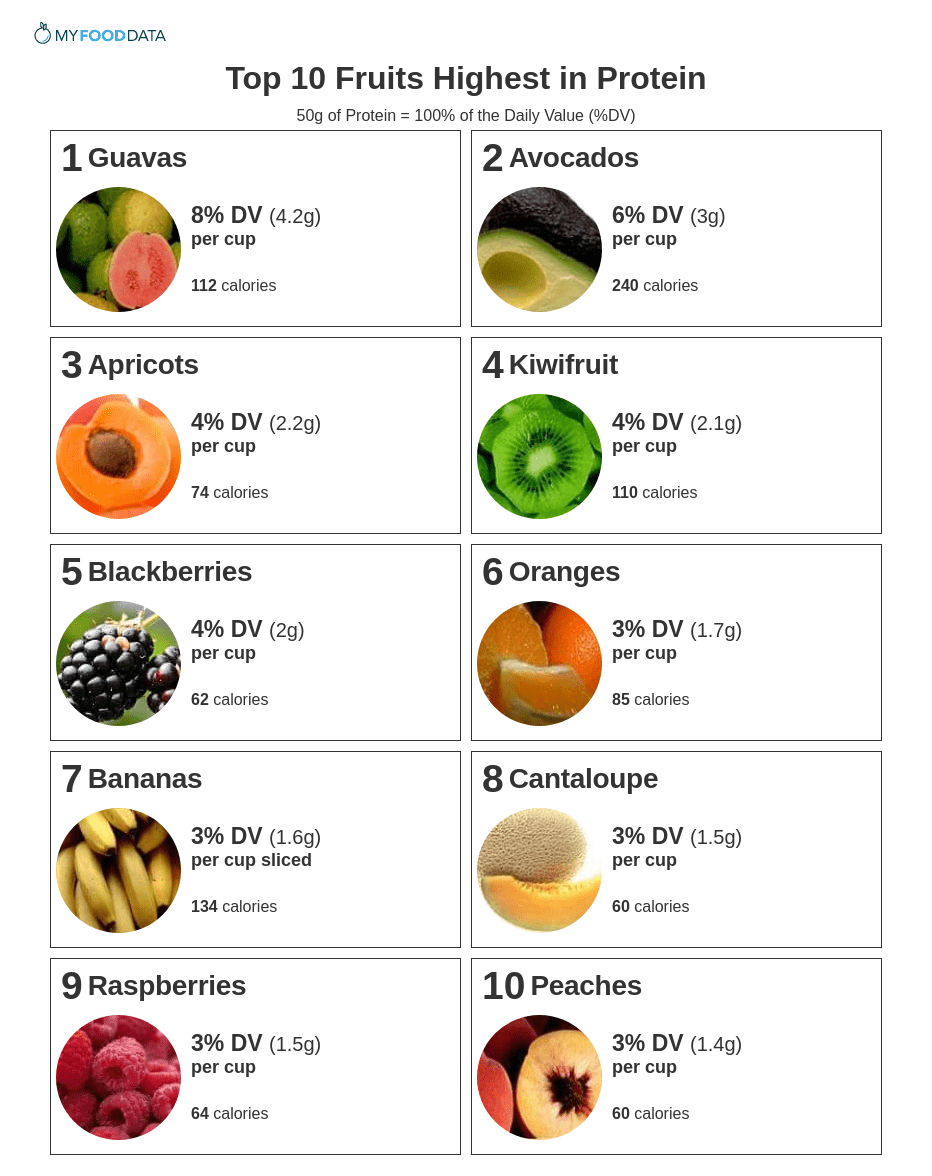
Avocados are not just loaded with healthy fats; they also contain about 4 grams of protein each! They make the perfect addition to sandwiches, salads or simply enjoyed on their own as part of a balanced meal.
6. Guava:
Guava may be best known for its high vitamin C content, but it is also a surprisingly good source of protein. With around 4 grams of protein per cup, this tropical fruit can be enjoyed fresh or added to smoothies for an extra nutritional boost.
7. Blackberries:
Blackberries not only provide a sweet and juicy treat but are also a great source of dietary fiber and antioxidants. Additionally, they contain about 2 grams of protein per cup, making them a fantastic option for those looking to increase their protein intake while satisfying their taste buds.
8. Lentils:
Lentils are legumes known for their impressive nutritional profile. They are loaded with protein (approximately 18 grams per cooked cup) as well as fiber and various vitamins and minerals. Lentils can be used in soups, stews, salads or even made into delicious veggie burgers.
9. Brussels Sprouts:
Brussels sprouts may have been the bane of your childhood dinner plate, but these little cruciferous vegetables deserve another chance! Not only do they offer essential nutrients like vitamin C and vitamin K but they also pack about 3 grams of protein per cup when cooked.
10. Pumpkin Seeds:
Don’t throw away those pumpkin seeds after carving your Halloween jack-o’-lantern! They’re packed with valuable nutrients including healthy fats, magnesium, iron, and approximately 8 grams of protein per ounce (about 28g). Roast them in the oven with some salt and spices for a tasty snack or sprinkle them over salads.
11. Chia Seeds:
Chia seeds have gained popularity due to their numerous health benefits such as being rich in omega-3 fatty acids and fiber. But did you know that they also contain about 5 grams of protein per ounce? Add chia seeds to your morning yogurt or blend them into smoothies for an extra dose of plant-based goodness.
12. Artichokes:
Artichokes not only make a delicious addition to pasta dishes or salads but also provide a good amount of protein. With around 4 grams of protein per medium-sized artichoke, they are an excellent option for those looking to increase their plant-based protein intake.
By incorporating these protein-rich fruits and vegetables into your diet, you can ensure that your body receives the essential amino acids it needs for optimal health. Remember to pair them with other nutrient-dense foods to create balanced meals that support overall well-being. Whether you’re a vegetarian, vegan or simply looking to add more plant-based options to your diet, these protein-packed fruits and vegetables are sure to delight your taste buds while nourishing your body.

Leave a Reply