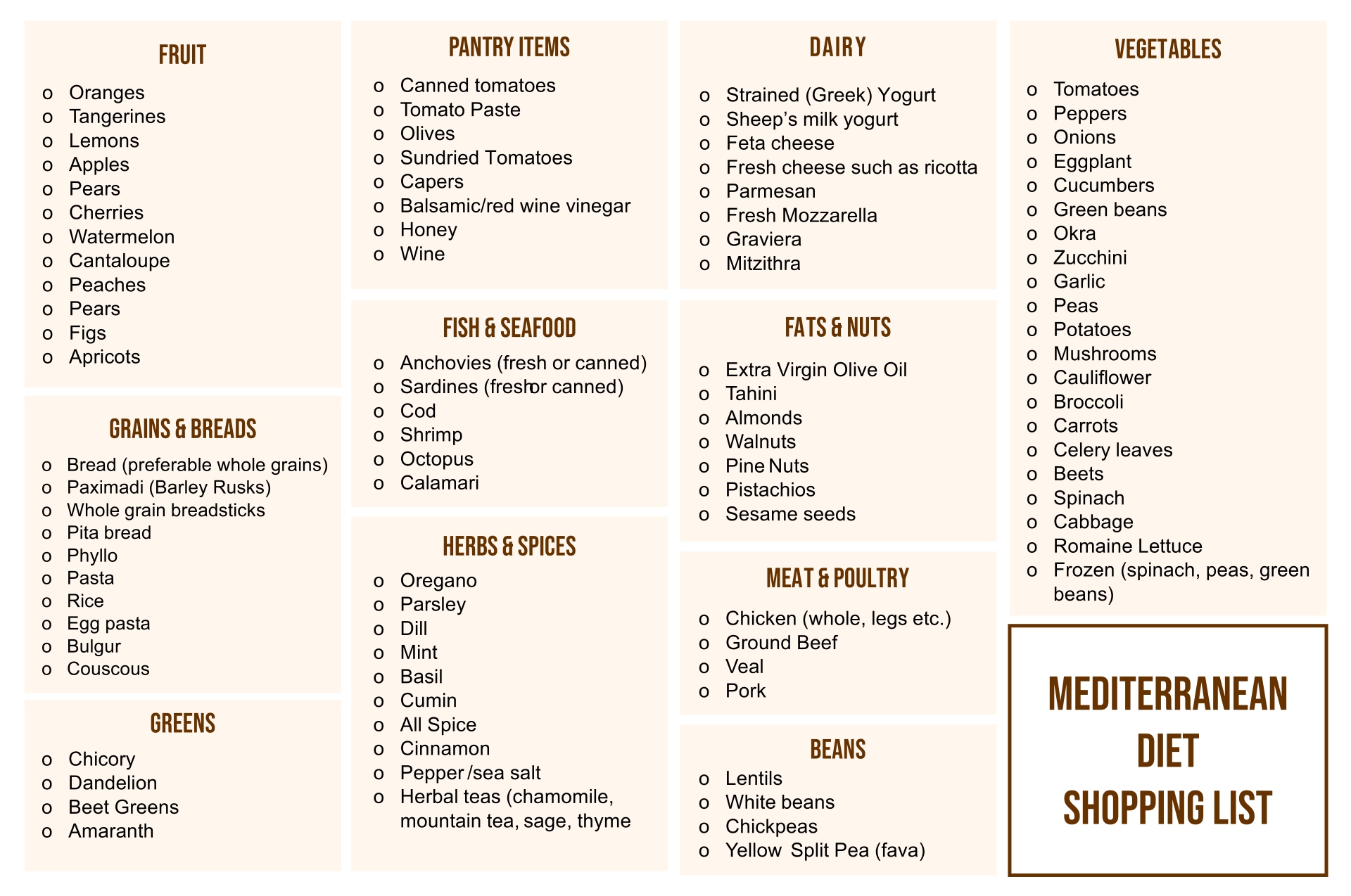
The Mediterranean diet has gained popularity for its numerous health benefits, including reducing the risk of heart disease and promoting weight loss. Central to this diet is a focus on fresh, whole foods that are abundant in the Mediterranean region. If you’re looking to adopt this healthy eating plan, here are some tips for grocery shopping on the Mediterranean diet.
1. Embrace fruits and vegetables: Load up your cart with a variety of colorful fruits and vegetables. Aim for at least five servings per day, focusing on seasonal produce whenever possible. Stock up on leafy greens like spinach and kale, as well as tomatoes, peppers, cucumbers, and zucchini.
2. Choose whole grains: Opt for whole grain options such as whole wheat bread, brown rice, quinoa, bulgur wheat, and oats instead of refined grains like white bread or pasta. These provide more fiber and nutrients while keeping you fuller for longer.
3. Include lean proteins: The Mediterranean diet emphasizes lean sources of protein such as fish (salmon, sardines), poultry (chicken breast), legumes (chickpeas), nuts (almonds), and seeds (chia seeds). Be sure to vary your protein choices throughout the week.
4. Incorporate dairy products: While not consumed in large quantities in traditional Mediterranean diets, dairy products can still have a place in moderation if tolerated well by individuals. Choose low-fat or Greek yogurt options without added sugars or opt for small portions of cheese like feta or mozzarella.
5. Don’t forget about healthy fats: Healthy fats are an essential part of the Mediterranean diet. Look for olive oil—a staple in this eating plan—and use it as your primary cooking oil rather than butter or margarine. Include avocados, olives, nuts (almonds/walnuts) and seeds (flaxseeds/chia seeds) in your grocery list too.
6. Select seafood wisely: Seafood is a key component of the Mediterranean diet due to its high omega-3 fatty acid content. Opt for fatty fish like salmon, mackerel, and sardines as they offer the most heart-healthy benefits. Choose sustainable options to support both your health and the environment.
7. Limit processed foods: To truly embrace the Mediterranean diet, it’s important to minimize or avoid highly processed foods such as pre-packaged snacks, sugary cereals, soda, and fast food. These items are typically high in unhealthy fats, added sugars, and sodium.
8. Explore the spice aisle: Spices and herbs not only add flavor but also offer numerous health benefits. Stock up on staples like garlic powder, oregano, basil, thyme, rosemary, turmeric, cinnamon – all of which can enhance the taste of your meals without relying solely on salt or unhealthy condiments.
9. Buy fresh herbs: Fresh herbs like parsley, cilantro (coriander), mint and dill are commonly used in Mediterranean cuisine to add freshness to dishes. They can be incorporated into salads or used as garnishes for soups and main courses.
10. Don’t forget about legumes: Legumes such as chickpeas (garbanzo beans), lentils (brown/green), black beans can serve as excellent sources of fiber and plant-based protein in a Mediterranean diet. Purchase dried legumes that need soaking or canned varieties without added salt whenever possible.
11. Load up on nuts and seeds: Nuts like almonds or walnuts make fantastic snacks while providing healthy fats and nutrients essential for overall well-being on this diet plan. Seeds such as chia seeds or flaxseeds are great additions too since they’re packed with fiber.
12. Stay hydrated with water: Although not technically a grocery item per se – water plays an integral role in any healthy eating plan including the Mediterranean diet. Hydration is key for overall health and well-being, so make sure to drink enough water throughout the day.
By following these tips, you’ll be well-prepared for grocery shopping on the Mediterranean diet. Remember that it’s not just about what you buy but also how you prepare and cook your meals. Aim to use simple cooking methods like grilling or steaming and experiment with herbs and spices to enhance flavors without relying on excessive salt or unhealthy fats. Enjoy the journey of exploring new flavors while improving your health!

Leave a Reply