Coral Reefs: A Guide to Their Importance and How to Protect Them
Introduction:
Welcome to our guide on coral reefs! These incredible ecosystems are not only beautiful but also vital for the health of our planet. In this article, we will explore the importance of coral reefs, their current state and threats they face, as well as ways we can protect them. So let’s dive in!
What are Coral Reefs?
Coral reefs are underwater structures formed by colonies of tiny animals called coral polyps. These polyps have a hard outer skeleton made of calcium carbonate that provides support and protection for the delicate organisms inside. Over time, when countless generations of corals grow on top of each other, vibrant reef systems form.
Importance of Coral Reefs:
1. Biodiversity Hotspots:
Coral reefs are often referred to as the “rainforests of the sea” due to their rich biodiversity. Despite covering less than 1% of the ocean floor, they provide a home for approximately 25% of all marine species known to date. From colorful fish and sea turtles to sharks and seahorses, these ecosystems support an incredible array of life.
2. Economic Value:
Coral reefs contribute significantly to local economies through tourism, fisheries, and shoreline protection. According to a report by The Nature Conservancy, healthy coral reef systems generate billions in economic value annually worldwide.
3. Carbon Sink:
Coral reefs play an important role in climate regulation by acting as carbon sinks—absorbing and storing large amounts of atmospheric carbon dioxide (CO2). This helps mitigate climate change impacts by reducing greenhouse gas concentrations in the atmosphere.
Threats Facing Coral Reefs:
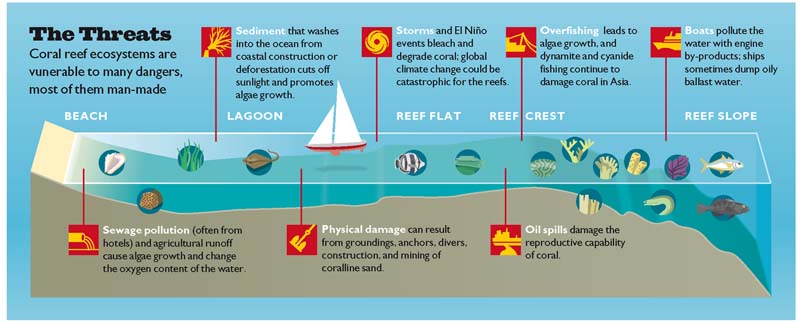
Unfortunately, despite their ecological significance, coral reefs face numerous threats today:
1. Climate Change:
Rising ocean temperatures due to global warming pose one of the greatest threats to coral reefs worldwide. When water temperatures exceed certain thresholds for extended periods, coral bleaching occurs. This is the process by which corals expel their symbiotic algae, resulting in a loss of color and increased susceptibility to disease and death.
2. Ocean Acidification:
As excess carbon dioxide is absorbed by seawater, it reacts with water molecules to form carbonic acid. This leads to ocean acidification, which reduces the availability of carbonate ions necessary for coral polyps to build their skeletons. As a result, corals grow more slowly and become weaker.
3. Overfishing:
Overfishing disrupts the delicate balance within reef ecosystems. Removing key species from the food chain can have cascading effects on entire ecosystems, including corals. Additionally, destructive fishing practices such as dynamite or cyanide fishing can directly damage reefs.
4. Pollution:
Pollution from various sources—agricultural runoff, sewage discharge, oil spills—can harm coral reefs in different ways. Nutrient-rich runoff can cause harmful algal blooms that smother corals while toxins and sedimentation reduce water quality and light penetration essential for photosynthesis.
5. Physical Destruction:
Coastal development often involves dredging channels or building structures that disrupt natural water flow patterns or physically destroy reefs themselves.
Protecting Coral Reefs:
1. Reduce Your Carbon Footprint:
Reducing greenhouse gas emissions is crucial for mitigating climate change impacts on coral reefs. Make sustainable choices like using renewable energy sources, driving less (carpooling or biking), and adopting energy-efficient habits at home.
2. Support Sustainable Seafood Practices:
Choose sustainably caught seafood by looking for certification labels such as MSC (Marine Stewardship Council). Avoid consuming fish known to be overfished or caught using destructive methods like bottom trawling.
3. Practice Responsible Snorkeling/Diving:
When exploring coral reefs as a visitor, ensure you follow responsible snorkeling/diving guidelines provided by tour operators or local authorities. Never touch or step on corals, as this can cause irreparable damage.
4. Be Mindful of Chemical Usage:
Avoid using chemicals, such as fertilizers and pesticides, that can end up in waterways and eventually reach the ocean. Opt for eco-friendly alternatives when possible.
5. Support Conservation Organizations:
Donate to or volunteer with organizations focused on coral reef conservation efforts. These organizations work towards research, restoration, and education programs to protect these fragile ecosystems.
Conclusion:
Coral reefs are not only stunning natural wonders but also vital ecosystems that support countless species and provide numerous benefits to our planet. By understanding their importance and taking action to protect them from the threats they face, we can ensure the survival of these precious underwater habitats for generations to come. Let’s do our part in preserving coral reefs and the incredible biodiversity they harbor!

Leave a Reply