Thiamin (vitamin B1): The Essential Nutrient for a Healthy Mind and Body
In the world of nutrition, vitamins play an indispensable role in maintaining optimal health. One such vitamin is thiamin, also known as vitamin B1. Thiamin is a water-soluble vitamin that is essential for the proper functioning of our bodies. It is involved in numerous biological processes and plays a crucial role in converting carbohydrates into energy. In this article, we will explore the importance of thiamin in our diet and how to ensure we are getting enough of it.
Thiamin serves as a coenzyme, meaning it helps enzymes carry out various chemical reactions within our cells. These reactions are vital for energy production from glucose metabolism, making thiamin an essential nutrient for our brain and nervous system function. Additionally, it aids in the breakdown of amino acids and fatty acids while supporting normal growth and development.
One notable condition associated with thiamin deficiency is beriberi. Historically prevalent in regions where polished rice was a staple food, beriberi causes weakness, muscle wasting, nerve damage, cardiovascular problems, and even death if left untreated. Fortunately, due to increased awareness about balanced diets and fortified foods today, beriberi has become rare in most parts of the world.
While severe cases of thiamin deficiency are uncommon nowadays, mild deficiencies can still occur due to poor dietary choices or certain medical conditions that interfere with absorption or utilization of the vitamin. Chronic alcoholism is one such example as excessive alcohol consumption impairs both thiamin absorption from the intestines and its storage within liver cells.
To prevent any potential deficiencies or maintain adequate levels of thiamin intake daily recommended amounts vary depending on age group:
– For adult men: 1.2 milligrams per day
– For adult women: 1.1 milligrams per day
– Pregnant women: 1.4 milligrams per day
– Breastfeeding women: 1.5 milligrams per day
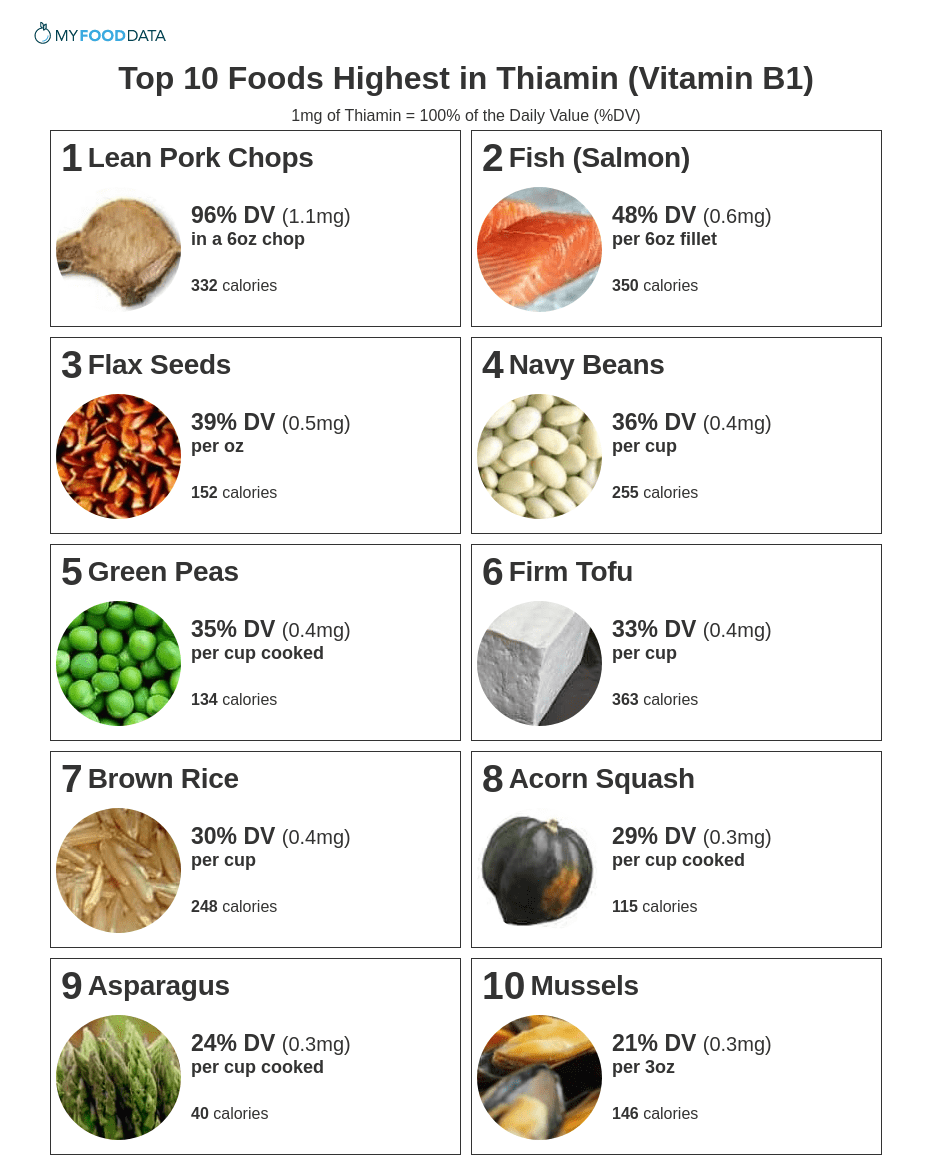
Thiamin can be found in a wide range of foods, making it relatively easy to include in your diet. Whole grains such as brown rice, oats, and whole wheat bread are excellent sources of thiamin. Legumes like lentils and black beans also provide a significant amount of this vitamin.
For those who prefer animal products, lean meats like pork and poultry are good sources of thiamin too. Fish such as salmon and trout, along with eggs and dairy products, further contribute to the overall intake.
Fruits and vegetables may not contain high levels of thiamin compared to other food groups but should still be part of a balanced diet for their other nutritional benefits. Oranges, peas, spinach, mushrooms, and potatoes are examples of fruits and vegetables that contain some amount of thiamin.
In addition to dietary sources, fortified foods can also help meet your daily thiamin needs. Many breakfast cereals are now enriched with vitamins including B1 to ensure that you start your day off right.
While getting enough thiamin through diet is generally achievable for most people following a healthy eating pattern, certain individuals may require additional supplementation due to specific health conditions or lifestyle factors.
For instance:
– Pregnant women or those planning pregnancy often benefit from prenatal vitamins that contain higher levels of essential nutrients.
– Individuals with malabsorption issues resulting from gastrointestinal disorders might need supplemental forms prescribed by healthcare professionals.
– Heavy drinkers or alcoholics who struggle with poor nutrition could benefit from medical intervention to address both nutrient deficiencies and addiction-related problems simultaneously.
It is important to remember that excessive intake of any single nutrient can have adverse effects on our health as well. However rare it may be for someone consuming a balanced diet rich in diverse foods containing natural amounts of nutrients like thiamine – mega-dosing should always be avoided unless specifically recommended by a healthcare professional for therapeutic purposes.
In conclusion, thiamin is an essential vitamin that plays a significant role in maintaining our overall health and well-being. From energy production to proper nerve function, thiamin’s contributions are undeniable. By incorporating foods rich in thiamin into our daily diet, we can ensure we meet our nutritional needs without any issues. Remember to maintain a varied and balanced eating pattern while being mindful of individual requirements to keep your body fueled with this vital nutrient.

Leave a Reply