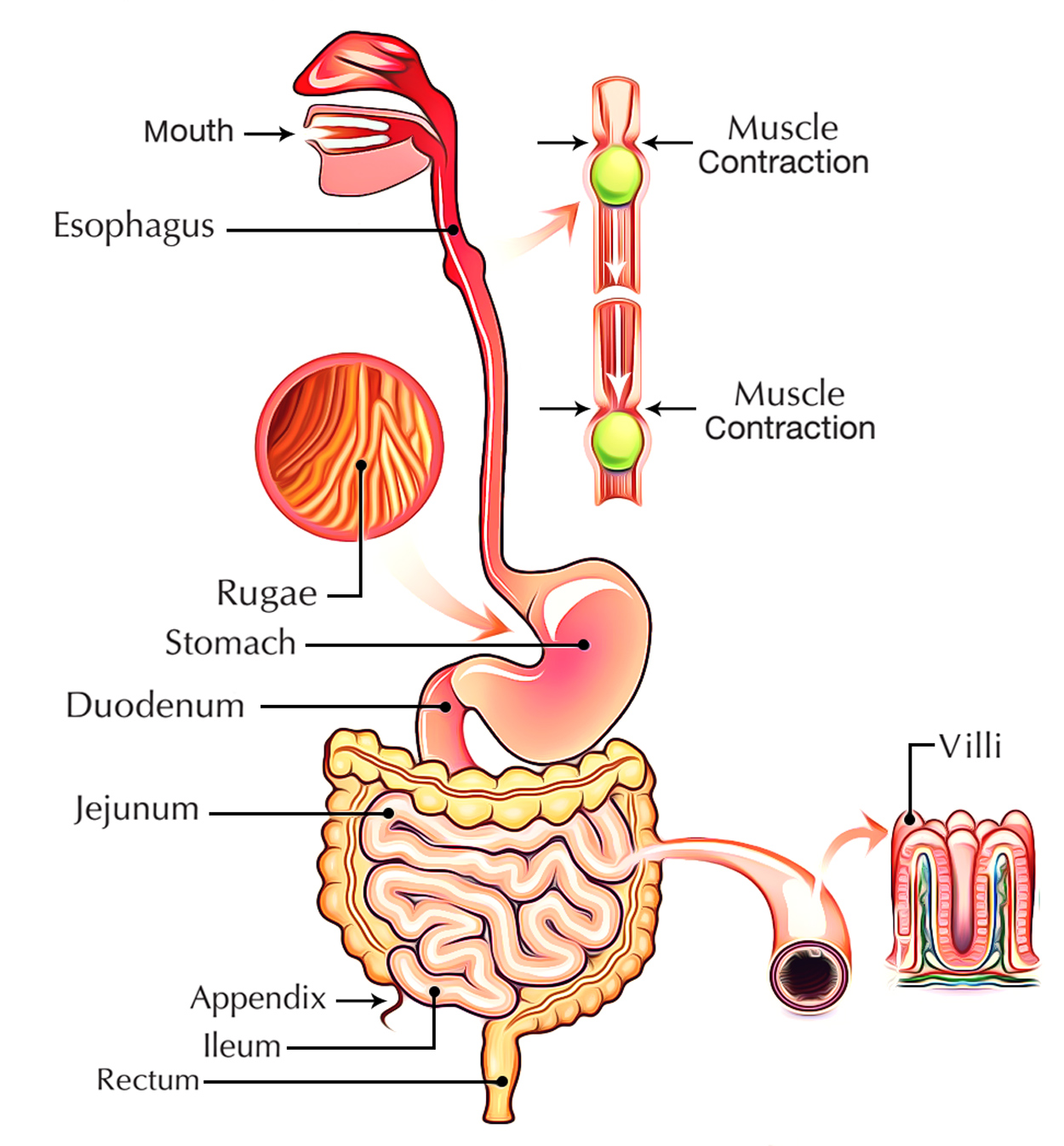
Digestion is a complex process that the body undergoes to break down food into smaller components that can be absorbed by the body. It involves many organs and enzymes working together in harmony to ensure that nutrients are properly extracted from food, waste products are eliminated, and energy is produced.
The digestive system starts with the mouth, where food is chewed and mixed with saliva. Saliva contains enzymes that help break down starches into simple sugars. From there, the food travels down the esophagus and reaches the stomach.
In the stomach, gastric juices mix with food to further break it down into a liquid form called chyme. This acidic environment kills most of the bacteria present in foods while also activating pepsinogen which turns into pepsin – an enzyme responsible for breaking proteins in our diet.
Once chyme leaves the stomach it enters small intestine where most of absorption takes place. Pancreatic juice consisting of bicarbonate neutralizes acidity of chyme coming from stomach while pancreatic enzymes like amylase breaks carbohydrates whereas lipase dissolves fats into fatty acids and glycerol intended for absorption across intestinal walls.
The liver plays a significant role in digestion as well; it produces bile which helps emulsify fats so they can be more easily absorbed by intestinal wall or broken down by lipase before getting absorbed through villi inside intestines.
Finally, undigested waste products enter large intestine where water is reabsorbed back to blood stream leaving behind fecal matter which after defecation excreted outside body via anus.
It’s important to note that good digestion depends on healthy eating habits such as consuming enough fiber-rich foods alongside adequate hydration levels daily routine physical activity etc., this may prevent constipation or diarrhea – two common digestive problems people face today due primarily because of imbalanced diets or sedentary lifestyle choices among other factors like stress levels etc..
To support your digestive health you should prioritize nutrient-dense, whole foods to your diet. Avoid processed and artificial foods, limit alcohol intake and make sure you are drinking enough water throughout the day. Furthermore, incorporating probiotic-rich foods like yogurt or kefir can help promote a healthy gut microbiome which is crucial for proper digestion.
In conclusion, Digestion is an essential process that ensures our body gets the necessary nutrients from food while eliminating waste products appropriately. Understanding this process can help us make healthier choices in terms of what we eat and how much we consume daily.

Leave a Reply