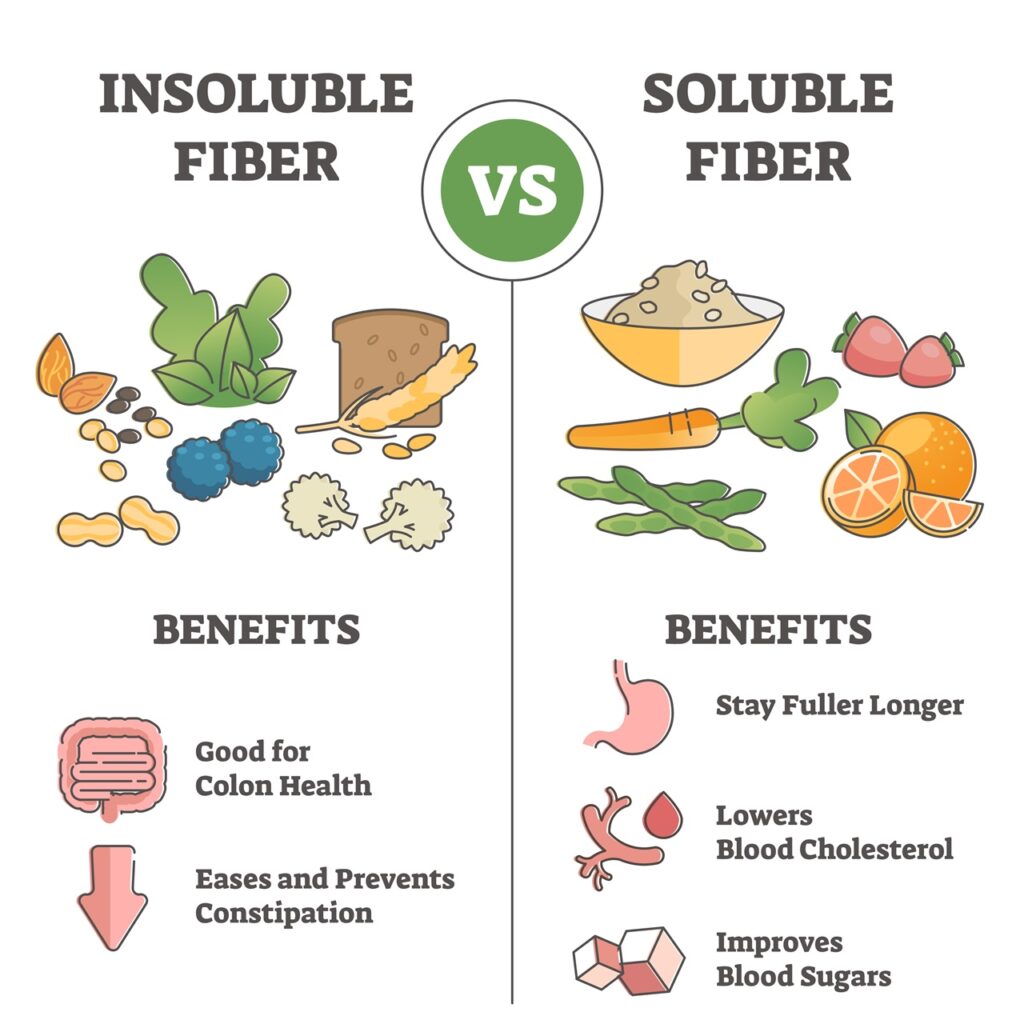
1. The role of soluble fiber in reducing cholesterol levels
Soluble fiber plays a crucial role in reducing cholesterol levels and promoting heart health. When consumed, it forms a gel-like substance that binds to bile acids in the intestines, preventing their reabsorption into the bloodstream. This triggers the liver to produce more bile acids by using cholesterol from the blood, thus lowering overall cholesterol levels.
Good sources of soluble fiber include oats, barley, legumes (such as beans and lentils), fruits (like apples and citrus fruits), and vegetables (such as Brussels sprouts and carrots). Including these foods in your diet can greatly contribute to maintaining healthy cholesterol levels.
2. Lesser-known sources of insoluble fiber
Insoluble fiber adds bulk to our stool, aiding digestion and preventing constipation. While many people are familiar with whole grains and wheat bran as sources of insoluble fiber, there are other lesser-known options worth exploring.
Some examples include flaxseeds, chia seeds, psyllium husk, cauliflower rice or couscous made from cauliflower florets, nuts like almonds or walnuts, popcorn (without excessive butter or salt), celery sticks with peanut butter or hummus for dipping – all packed with insoluble fiber!
3. Fiber-rich snacks for kids
Getting kids to eat enough fiber can be challenging but offering them tasty snacks can make it easier. Some kid-friendly options include apple slices dipped in almond butter or yogurt dip; carrot sticks with ranch dressing; homemade trail mix comprising nuts/seeds/dried fruit; air-popped popcorn lightly seasoned with herbs/spices; whole grain crackers topped with cheese/sliced avocado/hummus.
4. How to incorporate more fiber into a low-carb diet
Low-carb diets often lack sufficient dietary fibers due to restrictions on grains and starchy vegetables. However, non-starchy vegetables like broccoli/cauliflower/zucchini/cabbage/leafy greens are low in carbs and high in fiber. Additionally, flaxseeds, chia seeds, and avocados are excellent sources of fiber with minimal carbs. Including these foods can help meet the daily fiber requirements while adhering to a low-carb diet.
5. The impact of fiber on gut health and digestion
Fiber plays a significant role in promoting gut health and supporting proper digestion. It adds bulk to the stool, preventing constipation and promoting regular bowel movements. Additionally, certain types of fiber called prebiotics act as food for beneficial gut bacteria, improving their growth and colonization.
Consuming a variety of fruits, vegetables, whole grains, legumes, nuts/seeds ensures an adequate intake of both soluble and insoluble fibers necessary for optimal gut health.
6. Fiber-rich options for vegan and vegetarian diets
Vegans and vegetarians have many excellent options for obtaining sufficient dietary fiber. Legumes like lentils/chickpeas/black beans provide both protein and fiber; quinoa/brown rice/barley offer substantial amounts of soluble fiber; chia/flaxseeds contain plenty of insoluble fiber; fruits/vegetables/nuts also contribute significantly to overall dietary fiber intake.
7. The benefits of resistant starch as a type of dietary fiber
Resistant starch acts similarly to soluble fibers but has additional benefits due to its resistance to digestion in the small intestine. It reaches the large intestine intact where it becomes food for beneficial gut bacteria.
Resistant starch is found in underripe bananas/oats/potatoes/legumes/lentils/green peas/cold pasta or rice salads made with vinegar dressing or refrigerated overnight – all great options that can boost your resistant starch intake!
8. Fiber supplements: pros and cons
While it’s best to obtain dietary fibers from whole foods, supplements can be useful when increasing daily intake proves challenging due to various reasons such as medical conditions or specific dietary restrictions. However, it’s important to note that supplements should not replace a fiber-rich diet and should be used under the guidance of a healthcare professional.
9. High-fiber meal ideas for picky eaters
Picky eaters can also enjoy high-fiber meals by incorporating fibers subtly into their favorite dishes. For example, adding pureed vegetables like spinach or zucchini to pasta sauces; blending fruits/vegetables in smoothies; sneaking grated carrots/zucchini into muffins/breads; making homemade pizzas with whole grain crusts topped with veggies; and offering fruit kabobs as a snack are all creative ways to increase fiber intake for picky eaters.
10. The connection between fiber intake and weight management
Fiber-rich foods can aid in weight management due to several reasons. Firstly, they provide satiety, making you feel fuller for longer periods and reducing overeating tendencies. Secondly, some fibers bind to fat molecules, inhibiting their absorption during digestion. Lastly, high-fiber foods tend to have fewer calories compared to low-fiber options.
Including fiber-rich foods like fruits/vegetables/whole grains in your diet can help control calorie intake without sacrificing nutritional value.
11. Fiber-rich foods that can help regulate blood sugar levels
For individuals with diabetes or those looking to manage blood sugar levels effectively, consuming fiber-rich foods is essential. Soluble fibers slow down carbohydrate absorption from the digestive system, preventing rapid spikes in blood sugar levels after meals.
Good options include oats/barley/legumes/fruits such as berries/apples/citrus fruits/nuts/seeds – all beneficial for maintaining stable blood sugar levels throughout the day.
12. The effects of different cooking methods on the fiber content of foods
Cooking methods influence the fiber content of certain foods. Boiling vegetables may cause some soluble fibers to leach out into the cooking water while retaining insoluble fibers within the food itself.
To preserve as much fiber as possible, steaming or microwaving vegetables is recommended. Additionally, consuming fruits/vegetables in their raw form ensures maximum fiber content.
13. Fiber and its role in preventing certain types of cancer
Numerous studies have linked high-fiber diets to a reduced risk of developing certain types of cancer, including colon, breast, and stomach cancers. The exact mechanisms are still being studied but it is believed that the protective effect may be due to fibers’ ability to promote healthy digestion and elimination of waste products from the body.
Including a variety of fiber-rich foods can contribute to reducing the risk of these cancers while providing numerous other health benefits.
14. The importance of gradually increasing fiber intake to avoid digestive discomfort
When increasing fiber intake, it’s crucial to do so gradually. Rapidly introducing large amounts of fiber into your diet can lead to bloating, gas, and abdominal discomfort.
Start by adding small portions of high-fiber foods like whole grains or legumes and gradually increase serving sizes over time. This allows your digestive system to adjust slowly without causing unnecessary discomfort.
15. How to choose the right type of bread with high fiber content
Not all breads are created equal when it comes to their fiber content. To choose bread with high fiber content, opt for whole grain or whole wheat varieties instead of refined white bread.
Check the nutrition label for at least 3 grams or more per serving; look for “100% whole grain” on packaging; avoid terms like “enriched” or “bleached.” Choosing sprouted grain breads or those made with added seeds/nuts also boosts their overall fiber content.
16. Fiber-rich smoothie recipes for a quick and nutritious breakfast
Smoothies can be an excellent way to start your day with a dose of dietary fibers along with essential nutrients. Combine ingredients like leafy greens (spinach/kale), fruits (berries/bananas), chia/flaxseeds, nut butter, yogurt/kefir, and a liquid base like almond milk or coconut water.
Experiment with different combinations to find your preferred taste while ensuring an adequate fiber intake for breakfast.
17. The link between fiber consumption and cardiovascular health
High-fiber diets have been associated with improved cardiovascular health. Soluble fibers help reduce LDL cholesterol levels, which are known as “bad” cholesterol. By lowering LDL cholesterol and improving overall lipid profiles, fiber can contribute to reducing the risk of heart disease and stroke.
Including a variety of fruits, vegetables, whole grains, legumes in your diet is a simple yet effective way to support heart health through increased fiber consumption.
18. Tips for incorporating more whole grains into your diet
Incorporating more whole grains into your diet can be easy with a few simple tips: choose whole grain versions of bread/pasta/rice/cereal; swap white rice for quinoa/barley/brown rice; experiment with ancient grains like farro/spelt/kamut; try out new recipes that feature whole grain ingredients such as salads/stir-fries/soups; aim to make at least half of your daily grain intake from whole grain sources.
19. Lesser-known fruits and vegetables that are high in dietary fiber
While many people are familiar with common high-fiber fruits like apples or berries and vegetables like broccoli/carrots/spinach – there are lesser-known options worth exploring too! Examples include pears (with skin), raspberries/blackberries/passion fruit/guava/pomegranate/artichokes/beets/sweet potatoes (with skin)/Brussels sprouts – all excellent choices to diversify your daily fiber intake!
20. High-fiber options for individuals with gluten intolerance or celiac disease
For individuals with gluten intolerance or celiac disease who need to avoid wheat-based products but still want sufficient dietary fibers, there are plenty of alternatives available. Gluten-free grains like quinoa/millet/amaranth/buckwheat provide fiber and can be used as substitutes in recipes.
Additionally, fruits, vegetables, legumes, nuts/seeds are all gluten-free and high in dietary fibers, making them excellent choices for individuals with gluten intolerance or celiac disease.

Leave a Reply