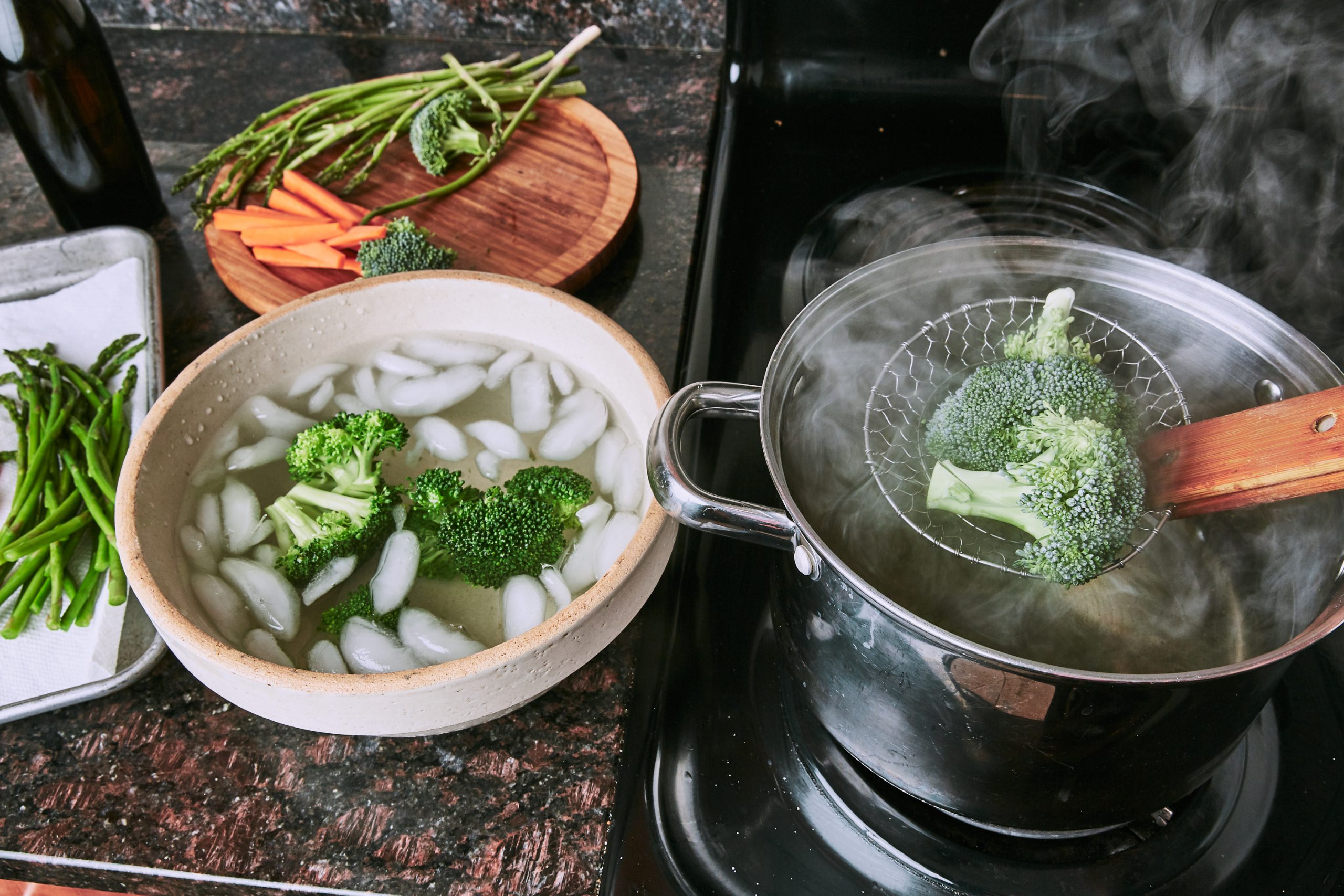
Blanching is a cooking technique that involves briefly boiling vegetables or fruits in salted water and then plunging them into ice-cold water. This process helps to preserve the color, texture, and flavor of the food while also removing any dirt or bacteria present. It’s an excellent way to prepare vegetables for freezing or canning, but it’s also a great way to enhance their nutrient content.
One of the primary benefits of blanching is that it helps to retain important nutrients in vegetables. When you cook vegetables at high temperatures for extended periods, some nutrients can be lost through oxidation or leaching into the cooking water. Blanching reduces this risk by quickly heating and cooling the vegetables, which helps to lock in their natural goodness.
Another benefit of blanching is that it makes certain veggies more digestible. For example, cruciferous greens like kale and broccoli contain compounds called glucosinolates that can cause digestive discomfort when consumed raw or undercooked. Blanching these greens not only removes impurities but also softens them up enough so they’re easier on your gut.
Blanching also has practical applications beyond health benefits. If you are planning on freezing veggies, blanching them beforehand will help preserve their quality over time while preventing freezer burn from occurring. By destroying enzymes during blanching, you’ll prevent produce from continuing to ripen after being frozen – making sure your frozen veggies retain their taste when defrosted later on.
So how do you go about blanching? Begin by filling a pot with enough lightly salted water to immerse your veggies entirely once added (roughly one tablespoon per quart). Bring the water just shy of boiling temperature before adding cut-up produce for around two minutes until bright green (or until tender if desired). Then transfer immediately to an ice bath using tongs or a slotted spoon until cooled down completely – usually 2-3 minutes depending on the vegetable.
In conclusion, blanching is an excellent technique to help maximize both nutrient content and flavor of vegetables. It’s not complicated or time-consuming, making it a great tool for anyone who wants to prepare healthy meals quickly and efficiently. Plus, the bonus of being able to freeze produce without any significant loss in quality? That’s just icing on the cake!

Leave a Reply