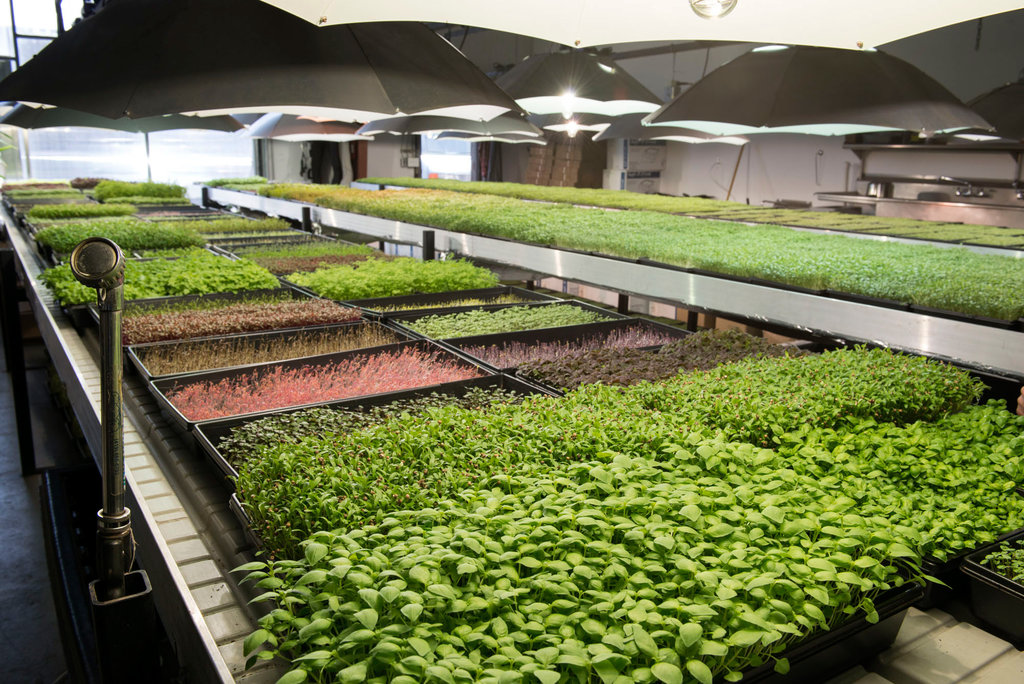
Calculating return on investment (ROI) is an essential step when starting any business, including a microgreen farm. Understanding the financial viability of your venture will help you make informed decisions and set realistic expectations for profitability. In this article, we will discuss eight key factors to consider when calculating ROI for a microgreen farm.
1. Start-up costs:
To determine ROI accurately, begin by estimating all start-up expenses. This includes purchasing or leasing land or greenhouse space, equipment such as grow lights and trays, seeds, soil, irrigation systems, and packaging materials. Research local prices to get accurate cost estimates.
2. Operating expenses:
Operating expenses include ongoing costs like utilities (water and electricity), fertilizers, pest control measures, labor wages if applicable, marketing efforts, insurance premiums, and other miscellaneous expenditures associated with running a microgreen farm. Make sure to account for these in your calculations.
3. Revenue streams:
Identify potential revenue streams for your microgreen farm. The primary sources could be selling directly to consumers at farmer’s markets or through a subscription-based model where customers receive regular deliveries of fresh microgreens. Additionally, restaurants and grocery stores might be interested in purchasing your products wholesale.
4. Pricing strategy:
Set competitive but profitable prices for your microgreens based on market research and customer preferences in your area. Consider factors such as production costs (including labor), quality of the product compared to competitors’, demand-supply dynamics within the local market.
5.Sales volume estimation:
Estimating sales volume can be challenging initially since it depends on various factors like target market size and demand trends in your area. Conduct thorough research about consumer preferences towards healthy eating habits and their willingness to adopt locally-grown produce like microgreens.
6.Growth rate projection :
Predicting growth rates allows you to understand how quickly you can expand operations over time which affects profitability calculations . Identify potential opportunities for expansion – whether it’s increasing production capacity or diversifying product offerings – and estimate how these changes could impact your revenue.
7. Time to break-even:
Determine the time it will take for your microgreen farm to reach the break-even point, where your total revenue equals your total expenses. This is an important milestone as it indicates when you can begin generating profits. Consider both fixed costs (e.g., equipment purchases) and variable costs (e.g., seeds and labor) when calculating this timeframe.
8. ROI calculation:
To calculate ROI, subtract all expenses from revenue and divide by total investment, then multiply by 100 to express it as a percentage.
ROI = ((Total Revenue – Total Expenses) / Total Investment) * 100
Remember that calculating ROI is not a one-time task; it should be done regularly to monitor the financial health of your microgreen farm. Adjustments may need to be made based on changing market conditions or operational efficiencies.
It’s also worth mentioning that while profitability is crucial, other benefits of running a microgreen farm include contributing to sustainable agriculture practices, providing fresh and healthy produce in local communities, and supporting food security initiatives.
In conclusion, calculating return on investment for a microgreen farm involves considering start-up costs, ongoing operating expenses, potential revenue streams, pricing strategies, sales volume estimation, growth rate projections, time to break-even point determination, and regular ROI calculations. By analyzing these factors carefully throughout different stages of business development , you can make informed decisions about financial viability , set realistic goals ,and run a profitable microgreen farming operation while promoting healthy eating habits within your community .

Leave a Reply